



From potato printing to the extraordinary art of Indian hand block printing, the story behind our luxury garden parasols.
Had I appreciated the great significance for my future business, I might have taken rather more interest in that great ritual beloved by nursery schools of taking a potato, carving a design into it, dipping it into paint and stamping it onto paper! Block printing and potato printing are from the same family.
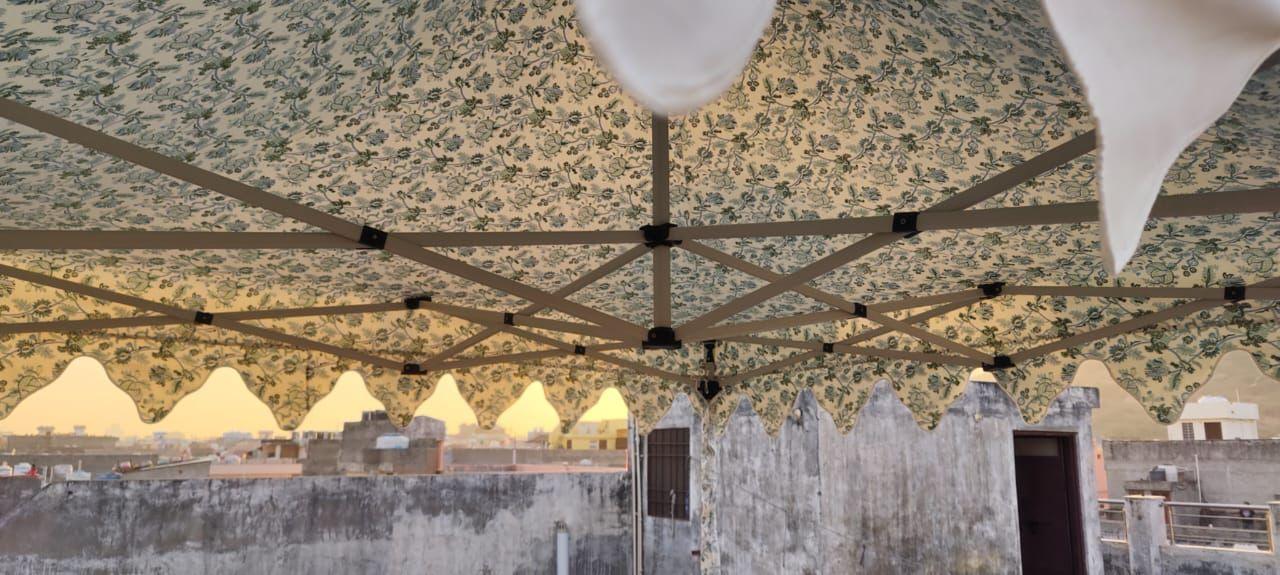
From the outside, one of our luxury garden parasols is deliberately restrained: crisp, pale and elegant. But step underneath it and suddenly there is this glorious sweep of colour and pattern overhead. The wow factor. It is still one of my favourite things about them.
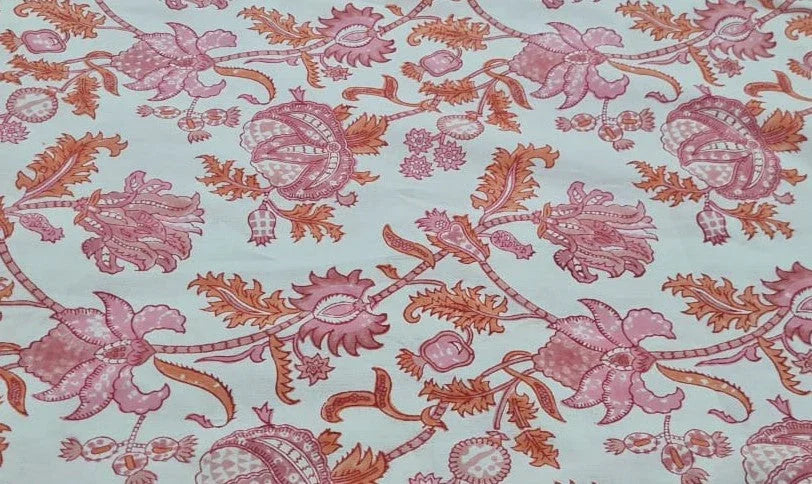
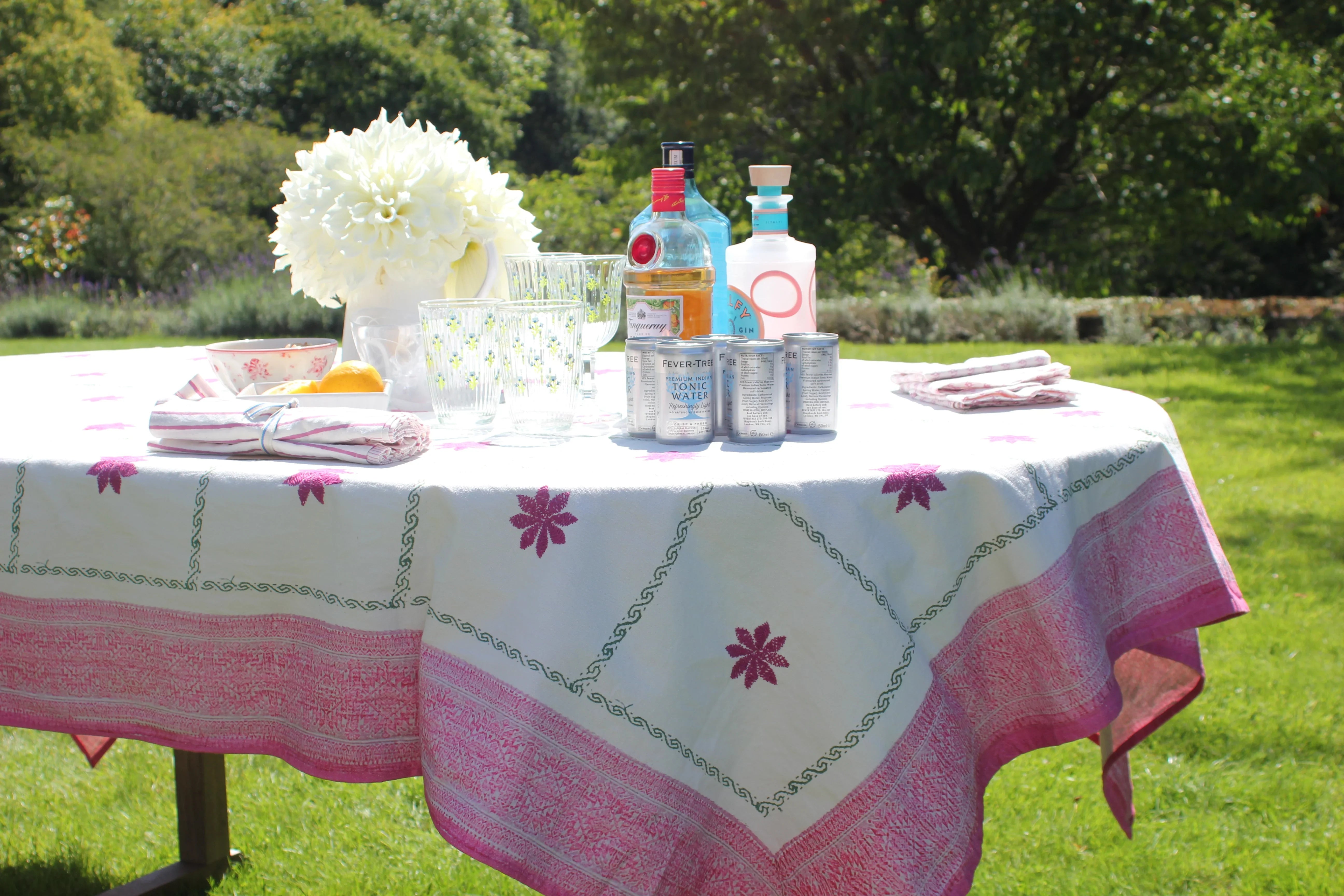
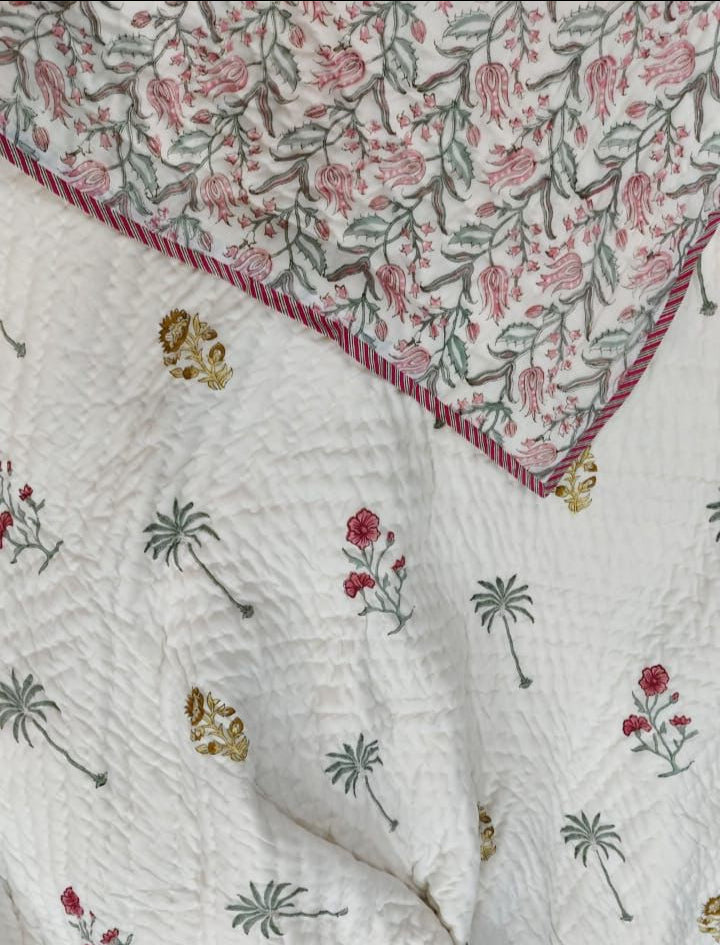
And at the heart of it is hand block printing, an extraordinary Indian craft. By the 12th century, India's printed textiles were already celebrated, and generations of skilled artisans have kept this extraordinary tradition alive. It's what gives our parasols, gazebos and tents so much of their character. And of course, there is also a lovely historical connection to Parasol-UK: printed Indian fabrics were traditionally used to make elaborate tents for royal processions.
We talk about our hand block printed fabrics all the time, but I thought it might be interesting to explain what that actually means, how they are made and why the tiny variations you occasionally see aren't faults at all.
They are part of the story.
What is hand block printing?
Hand block printing is exactly what it sounds like.
Rather than a design being printed onto fabric by a machine, the pattern is applied by hand using carved wooden blocks, and we use brass rather than wood for the designs to ensure the very crispest finish.
Each block carries part of the design. It is dipped into colour and carefully pressed onto the fabric, then repositioned and pressed again. And again. And again.
For a complicated design, several different blocks may be needed to create the various elements and colours of the finished pattern.
Watching someone experienced do it is pretty mesmerising. There is an extraordinary rhythm to it, but also enormous precision. Each impression has to meet the previous one sufficiently accurately for the pattern to flow across metres of fabric.
No computer is lining it up. No machine is correcting it. It is being done by eye, hand and years of experience. I've tried it, and it is SO much harder than these experts make it look!

Why is every hand block printed fabric slightly different?
This is one of the things I particularly love.
With machine printing, the aim is absolute uniformity. Hand block printing is different.
The pressure of the block will vary. The colour may take slightly differently in one place. One impression may not be absolutely identical to the one beside it. The weather conditions and humidity will be marginally different. The atmosphere in each workshop.
Those tiny variations are the fingerprints of the process. Each piece of block printed fabric is a signature.
It means that when you look closely at a hand block printed parasol, you are looking at something that has quite literally passed through somebody's hands.
For us, that is infinitely more romantic than machine-made perfection.
Why India?
There are actually several reasons, which I will cover in another post, but the relevant one is that India has an extraordinary textile heritage and Rajasthan in particular is famous for its beautiful printed fabrics and generations of skilled craftspeople. I have such enormous respect and admiration for these people, and we hope we can convey some of this passion to you. There really is no substitute for the best quality traditional Indian block printing
Over the years we have developed close relationships with the people who make our products. I've learnt an enormous amount from them, made mistakes, changed things, asked endless questions and discovered that making something which looks wonderfully effortless is generally anything but.
Our block printed garden parasols bring together those Indian textile traditions with something quite different: our love of the English garden.
And perhaps that unlikely marriage is part of what makes them feel so distinctive.
Why do we put the pattern on the INSIDE of our garden parasols?
This was always fundamental to the way we wanted our parasols to look.
We didn't want a heavily patterned object dominating the garden or fading in the sun. We envisaged something more sophisticated than that.
Our luxury garden parasols therefore have a crisp, plain outer canopy with our signature pelmet. From across the lawn they sit quietly amongst the planting rather than competing with it.
It's as you approach that the fun begins.
The hand block printed fabric is above you, the decorative pelmet frames the view beyond, and suddenly what was simply a place to sit in the shade becomes a little world of its own. There is something wonderfully unexpected about it and it really feels like a bit of magic.
The outside belongs to the garden. The inside belongs to you.
From printed cotton to a finished block printed parasol
Of course, printing the fabric is only the beginning.
The fabric then has to become a canopy. The pattern needs to sit properly within the shape, the sections have to work together, the pelmet has to fall correctly and the whole thing has to fit its frame.
Our parasols are handmade rather than churned off a production line, and we have become increasingly particular about the details.
The pale wooden pole and frame, brass fittings, the shape of the pelmet, the plain outer canopy and that wonderful patterned interior all have to work together.
Because there is a surprisingly fine line between something being decorative and something being too decorative. We don't want ours to be cluttered with tassels or extras, but joyful, romantic and special; completely at home in a British or Western garden.
Are hand block printed parasols practical in a British garden?
They certainly need to be.
There isn't much point making a beautiful garden parasol for the UK if it only works on a perfectly still Mediterranean afternoon.
Our parasols combine their decorative block printed interior with a practical water-resistant outer canopy, so the craftsmanship isn't there instead of practicality. The two have to coexist.
That was always important to us. These aren't objects designed merely to be photographed.
They are made to be lived under. For long lunches that roll on into supper. For children disappearing underneath the table. For books that don't get read because somebody has arrived with a bottle. For escaping the midday sun and, very often in England, for refusing to be defeated by a slightly questionable weather forecast.
weather forecast.
Why craftsmanship still matters
We live in a world in which it is possible to make almost everything faster. And often cheaper.
But there is something deeply satisfying about owning something where you can still see evidence of the person who made it. A tiny variation in a block print tells you that a human hand put it there. That is really important to us.
It is also why our relationship with the people who make our products in India matters so much to us. This isn't simply about buying in a beautiful fabric. It is about working with people whose knowledge is far greater than ours in their particular craft, and making something together that neither of us would have created independently.
Our hand block printed parasols may eventually end up in an English garden thousands of miles away, but India is quite literally woven into them.

Frequently asked questions
What is a block printed parasol?
A block printed parasol uses fabric decorated using traditional hand block printing. Wooden blocks carrying elements of a design are dipped in colour and pressed repeatedly onto the fabric by hand.
In our garden parasols, the block printed fabric appears on the inside of the canopy, while the outside remains deliberately plain and understated.
Is hand block printing the same as machine printing?
No. Machine printing can reproduce a design with almost perfect uniformity. With hand block printing, each impression is made individually, so very slight differences in colour, pressure or alignment are part of the handmade process.
Are block printed garden parasols suitable for the UK?
Yes, provided the parasol has been designed for outdoor use.
Our garden parasols combine a decorative hand block printed interior with a water-resistant plain outer canopy and a wooden frame. As with any garden parasol, sensible care should be taken in poor weather and strong winds.
Why are handmade parasols more expensive?
A genuinely handmade parasol involves far more human skill and time than a mass-produced garden umbrella. The fabric itself may be printed by hand before the canopy is cut and constructed, and the quality of the frame, fittings and finishing all contribute to the finished piece.
A little piece of India in an English garden
I sometimes think that is the simplest way of describing what we make.
Our luxury garden parasols, Hand block printed gazebos and Indian garden tents begin with skills and traditions thousands of miles away and eventually find themselves amongst roses, lawns, pots, terraces and kitchen gardens here at home. If you're wondering which would work best in your own garden, have a look at our guide to choosing between a garden parasol, gazebo and garden tent.
Two very different worlds, brought together under one canopy. And when I step underneath one and see that glorious block printed pattern overhead, I still feel exactly what I felt at the beginning.
Enchantment.
Next week: An Outdoor Room of Your Own: What's Coming to Our Garden Gazebos in 2027